
FireSmart Nova Scotia
With increasing wild fires, it’s a good idea to be prepared and boost the resilience of your home to wildfires. Our professional FireSmart assessments and mitigation services help reduce your risk.


Why FireSmart Matters?
- Up to 90% of homes lost to wildfire ignite from embers, not direct flames.
- Simple changes in your yard and home exterior can make a big difference
- When multiple homes in a neighbourhood are FireSmart, the collective protection is stronger. One prepared home can help shield the next.
- Removing dead trees, pruning branches, and clearing dense underbrush not only reduce fire risk but also promote a more attractive landscape.
- Preventing damage in the first place is far cheaper than rebuilding after a wildfire.

What FireSmart Services Do We Provide?
We bring extensive experience with participating in large-scale FireSmart contracts to protect municipalities in the Canadian Rockies. Now we bring our FireSmart experience and expertise to Nova Scotia.

Line/House & Roof Clearance
Power lines should be clear of branches and other vegetation. Maintain a buffer zone between your house and any trees in its immediate proximity.

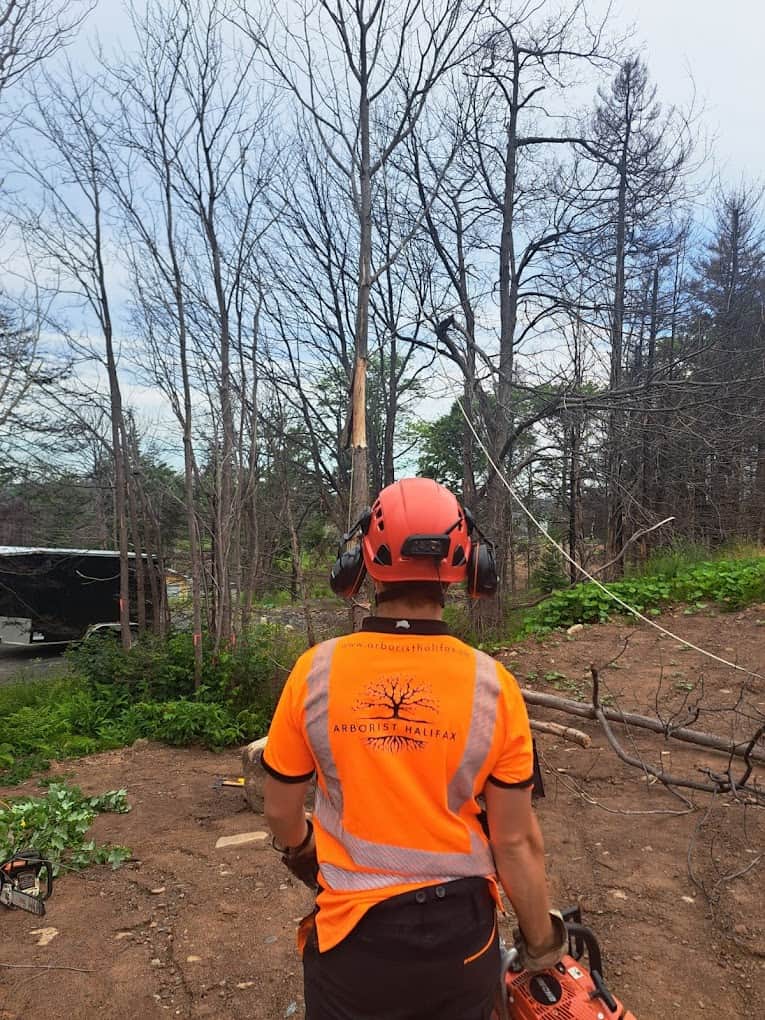
Removing Dead/Hazardous Trees
Older deciduous trees can have rot and damage that make them susceptible to wildland fire. We can can help assess the condition of mature trees and assist with removal if necessary.
Clearing Dense Underbrush and Spacing Trees
Include debris clean-up in spring and fall as part of your yard maintenance. Remove combustible shrubs from the drip line of trees.

Pruning Trees
Prune lower branches on mature trees up to 2m from the ground. This helps reduce the risk of surface fires spreading from the ground to the treetops.
Tips To FireSmart Your Property
Rake & Remove Dry Leaves
Rake and remove dry leaves and needles within 1.5 meters from home.
Move Woodpiles
Woodpiles stacked against a house pose a major hazard. Ideally move any woodpiles at least 10m away from structures.
Clear Leaves & Debris From Gutters and Roof
Gutter cleaning removes the debris easily ignited by sparks and embers.
Prune Lower Branches
Prune your trees up to 2meters from the ground. Remove any dead, low-quality branches.
Space Trees
Space trees on your property at least 3m apart and remove dense underbrush.
Remove Dead Trees
Remove any dead trees. Identify any fallen tree branches and dry vegetation, and haul them away or get them chipped.
Move Items Under Deck & Porches
Keep your flammable items such as propane tanks in enclosed storage.
Maintain Your Lawn
Keep grass around your property under 10 cm.
Keep Firefighting Tools at Your Disposal
Keep fire extiguishers, hoses, water tanks, etc. easily accessible.
Keep Power Lines Free of Branches
Power lines should be clear of branches and other vegetation.

For more tips, check FireSmart Canada website.
FireSmart FAQ
If you’re a municipality interested in FireSmart service, feel free to get in touch: in**@*************ax.ca (click on the email to reveal)
